Country-Specific Developments and Implementations within the Language Learning in-the-Wild (L2W) Project in Europe

About and Mission

Language learning in the wild (L2W) is about using the resources available in the second language life world of the newcomers for learning the local language. The local language plays an immediate role in the everyday lives of newcomers. At a minimum, newcomers are overhearers of and eavesdroppers to the spoken words around them and they encounter all types of written material, from advertisements in the streets to package texts on their favorite granola. L2W opens the doors of the language classrooms and encourages learners to actively seek opportunities to engage with local speakers in everyday situations—such as shops, public services, or community spaces—where language use is meaningful, spontaneous, and unpredictable. This website contains current and previous work about L2W, gives access to relevant publications and documents tools and inpirations that put the learner at the center of the learning process. Research about L2W builds on interaction research, usage based language acquisition processes and experiential learning models. It practices co-design with learners, teachers and organizations and their contacts to further the development of learning practices, materials and environments.

Inspirations and Tools

Language learning is shaped by the environments, people, materials, and activities that surround us. The tools and inspirations presented here are not fixed methods or step-by-step instructions. Instead, they introduce different tools that can be tried out once to understand raise aware to different possibilities and further adapt to your own situation. They are meant for raising awareness to different resources, exploring contexts, identifying opportunities for interaction, and engaging with language and reflection in different ways.

Each tool offers a perspective on how learning can emerge through observation, participation, collaboration, and reflection. They can be adapted, combined, and reinterpreted to suit different learners, settings, and goals. Examples of how they have been used can be found in initiatives such as Språkskap, the Taalarena, and The Icelandic Village.

🚧

Look at our desktop website to read more!

Country-Specific Developments and Implementations within the Language Learning in-the-Wild (L2W) Project in Europe

About and Mission

Language learning in the wild (L2W) is about using the resources available in the second language life world of the newcomers for learning the local language. The local language plays an immediate role in the everyday lives of newcomers. At a minimum, newcomers are overhearers of and eavesdroppers to the spoken words around them and they encounter all types of written material, from advertisements in the streets to package texts on their favorite granola. L2W opens the doors of the language classrooms and encourages learners to actively seek opportunities to engage with local speakers in everyday situations—such as shops, public services, or community spaces—where language use is meaningful, spontaneous, and unpredictable. This website contains current and previous work about L2W, gives access to relevant publications and documents tools and inpirations that put the learner at the center of the learning process. Research about L2W builds on interaction research, usage based language acquisition processes and experiential learning models. It practices co-design with learners, teachers and organizations and their contacts to further the development of learning practices, materials and environments.

Inspirations and Tools

Language learning is shaped by the environments, people, materials, and activities that surround us. The tools and inspirations presented here are not fixed methods or step-by-step instructions. Instead, they introduce different tools that can be tried out once to understand raise aware to different possibilities and further adapt to your own situation. They are meant for raising awareness to different resources, exploring contexts, identifying opportunities for interaction, and engaging with language and reflection in different ways.

Each tool offers a perspective on how learning can emerge through observation, participation, collaboration, and reflection. They can be adapted, combined, and reinterpreted to suit different learners, settings, and goals. Examples of how they have been used can be found in initiatives such as Språkskap, the Taalarena, and The Icelandic Village.

Sit Talk Sit

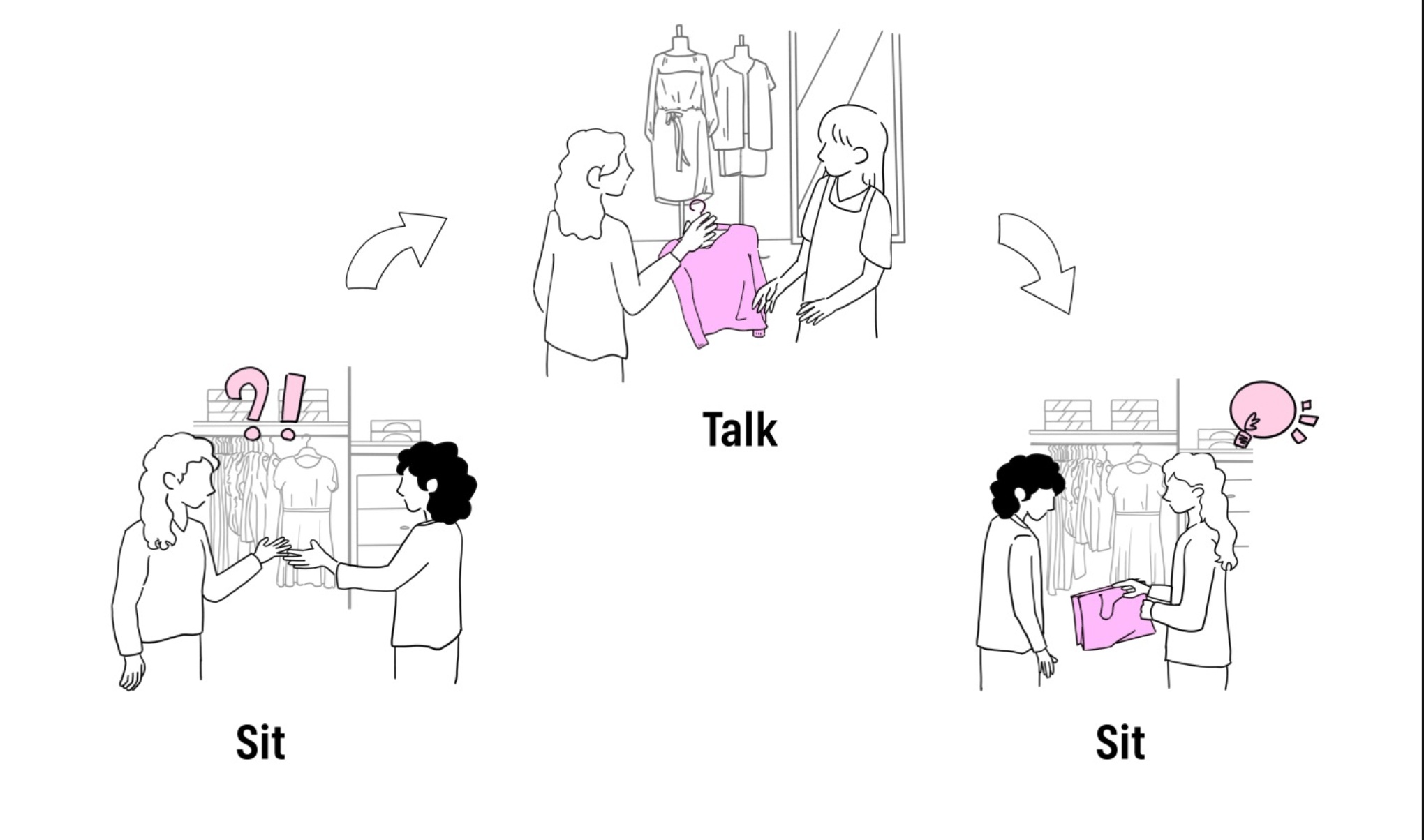
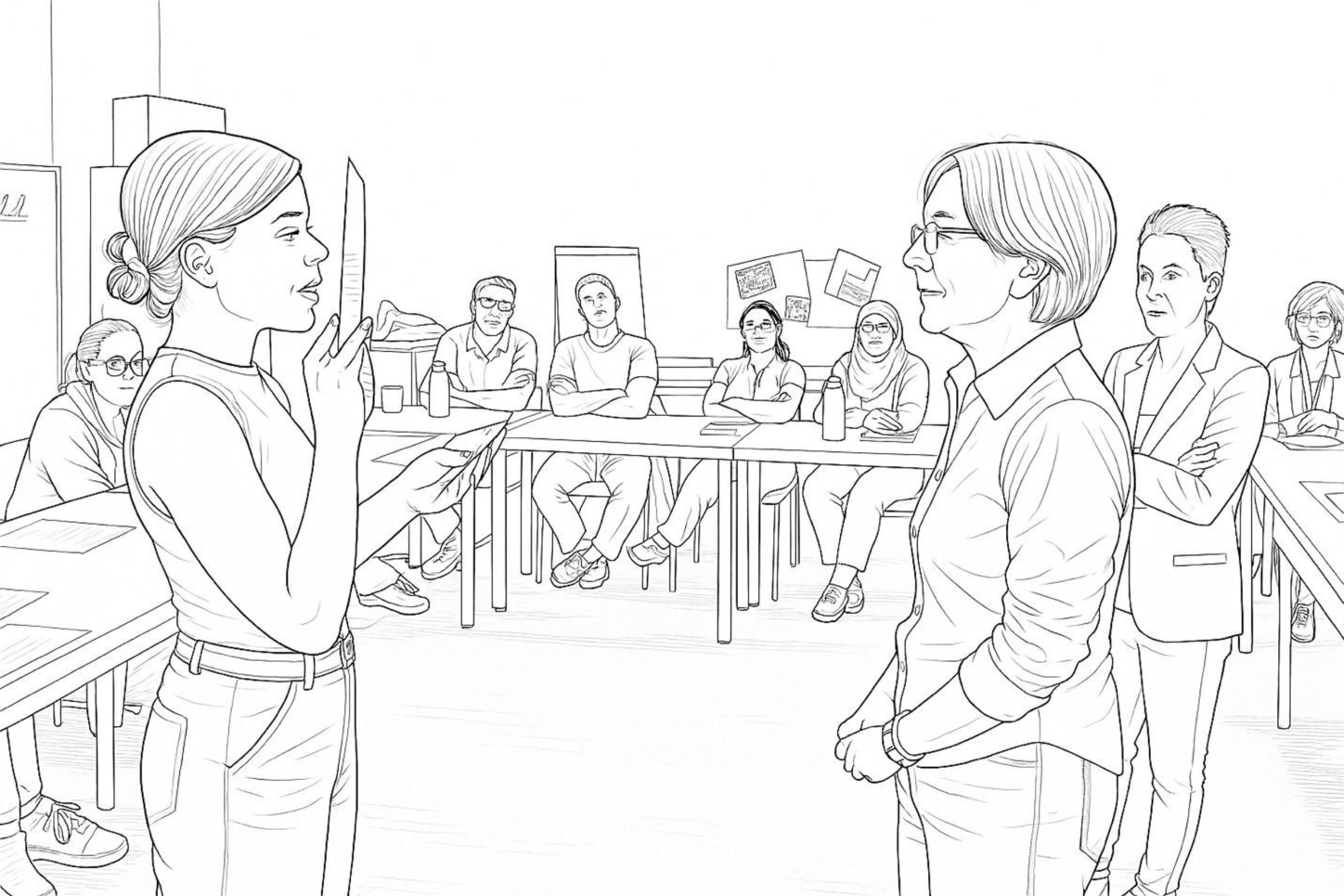
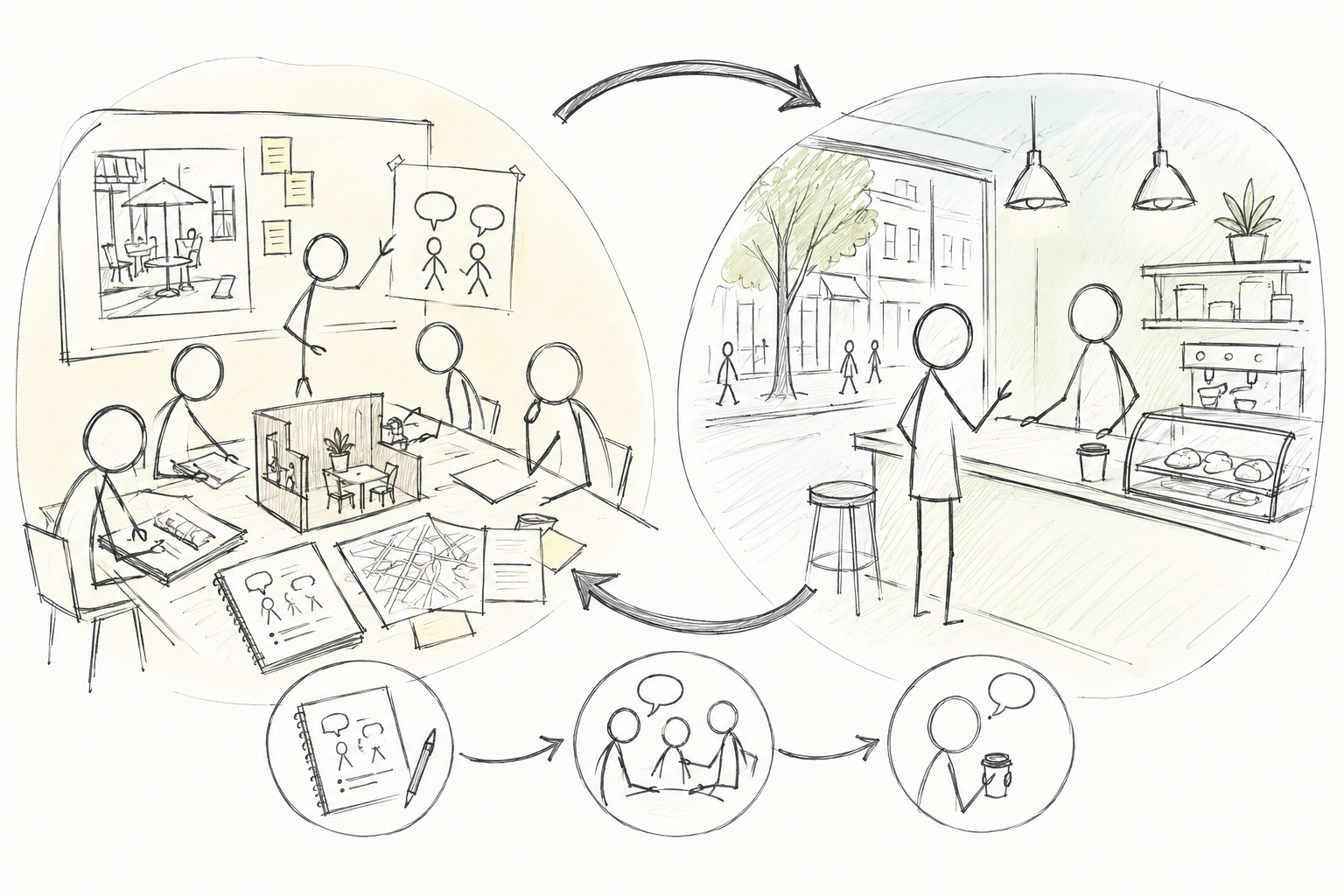
Sit–Talk–Sit is a simple activity structure for supporting language learning through real-world interactions. It helps learners organize participation by creating a rhythm of preparation, action, and reflection within everyday situations. Rather than treating interaction as something that happens after learning, Sit–Talk–Sit treats interaction itself as the primary learning opportunity.

Read More

Scouting

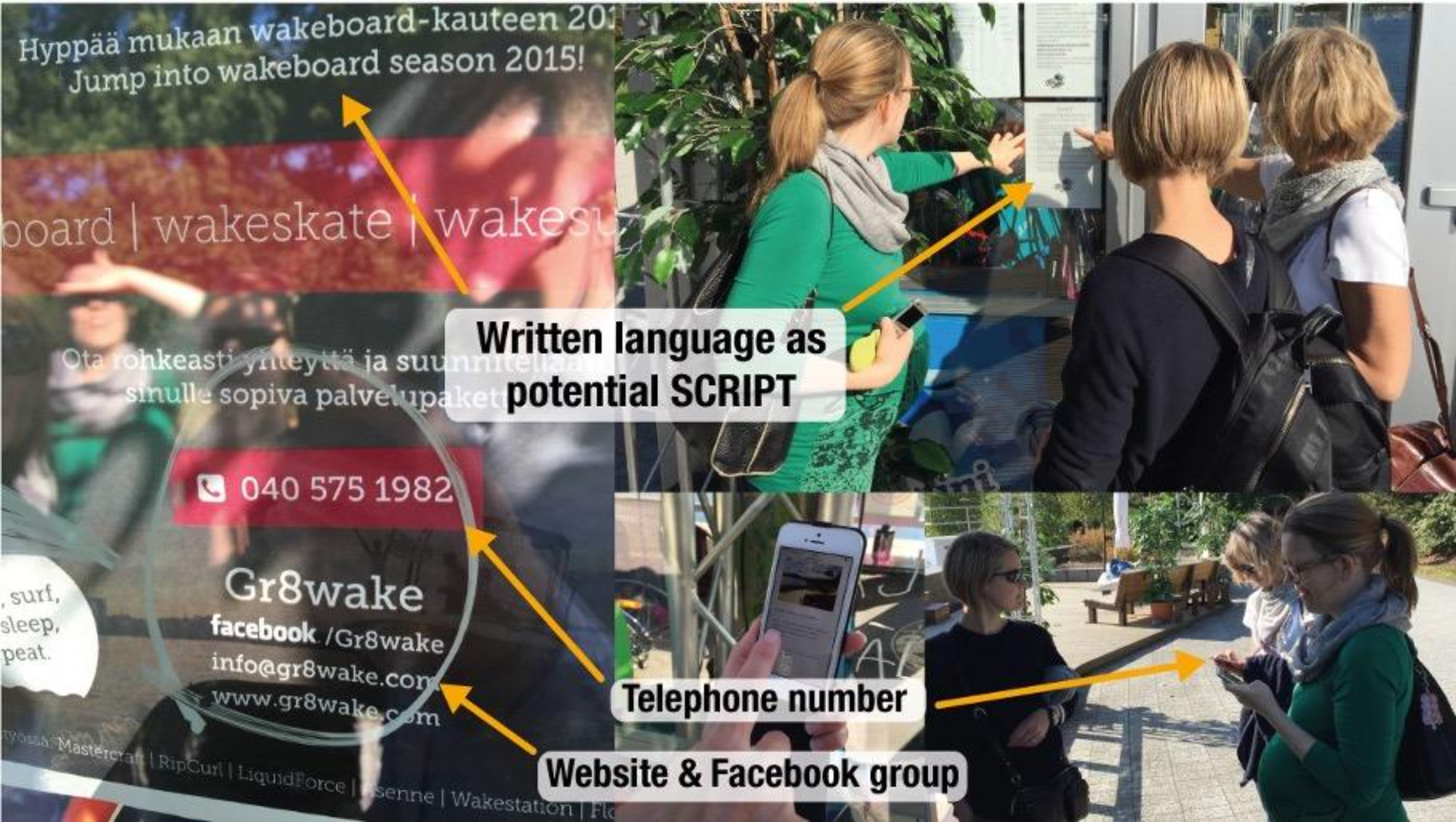
Scouting consists of surveying the environment to assess how the context is organized. Scouting is an observation exercise aimed at identifying potential resources that can support interactions in a specific context. When scouting, a learner pays attention and takes note of the social aspects of the space: types of interaction,people and order/rules of the interactions that take place in the context; as well as material aspects: written and unwritten material that can be used to facilitate and support an interaction.

Read More

Expander

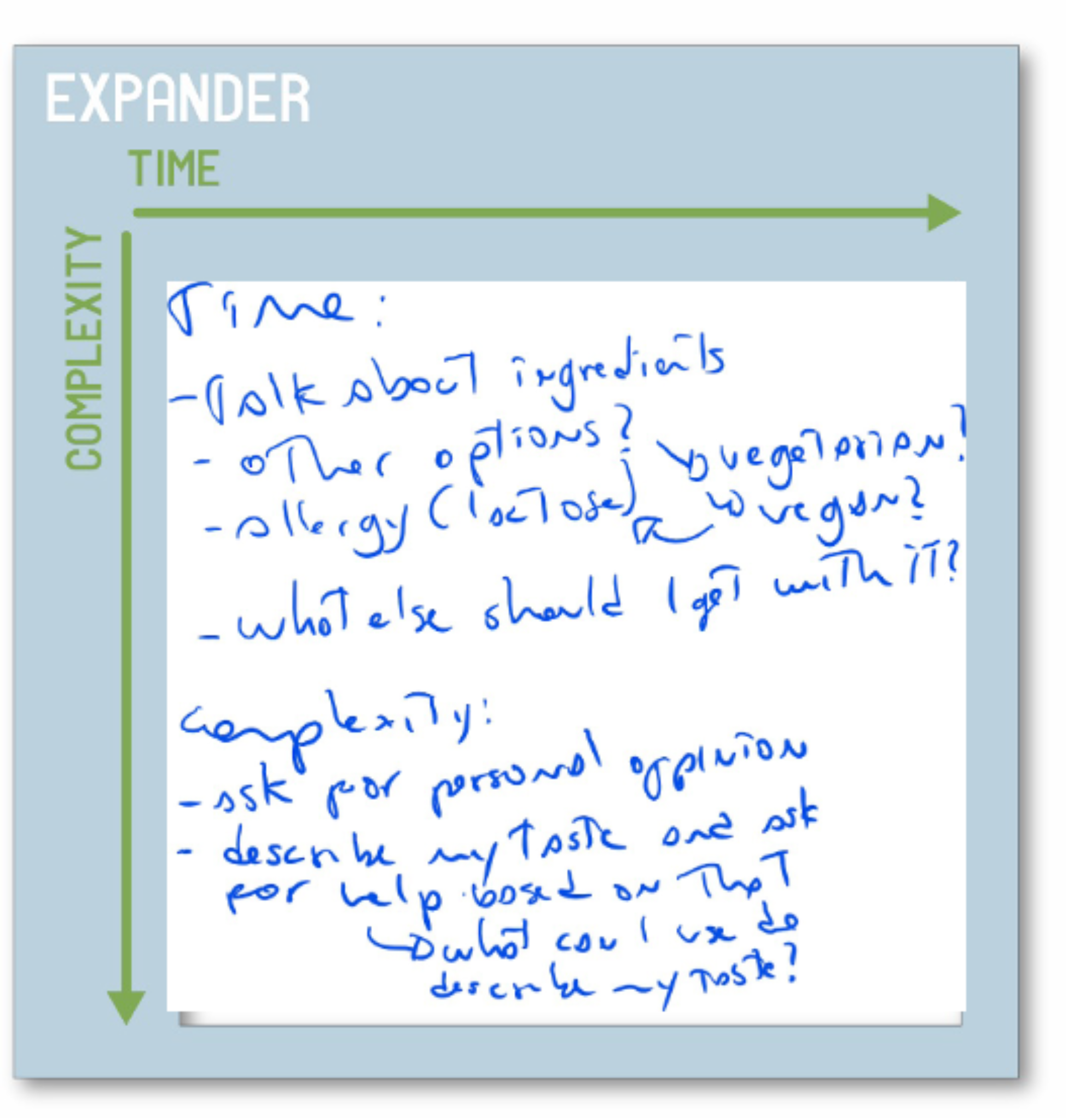
Expander is a reflective activity for listing possible ways to make an interaction longer in time and/or more complex in conversation. In this exercise, the learner searches for things such as topics, phrases, words, sentences and ideas that can expand an analyzed interaction. Expanders can be used both when planning for and reflecting on an interaction. The Expander card is a frame to be placed on top of an interaction -­‐ on an Interaction Navigator or Journey Map -­‐ but can be also used as a list to be taking during an interaction.

Read More

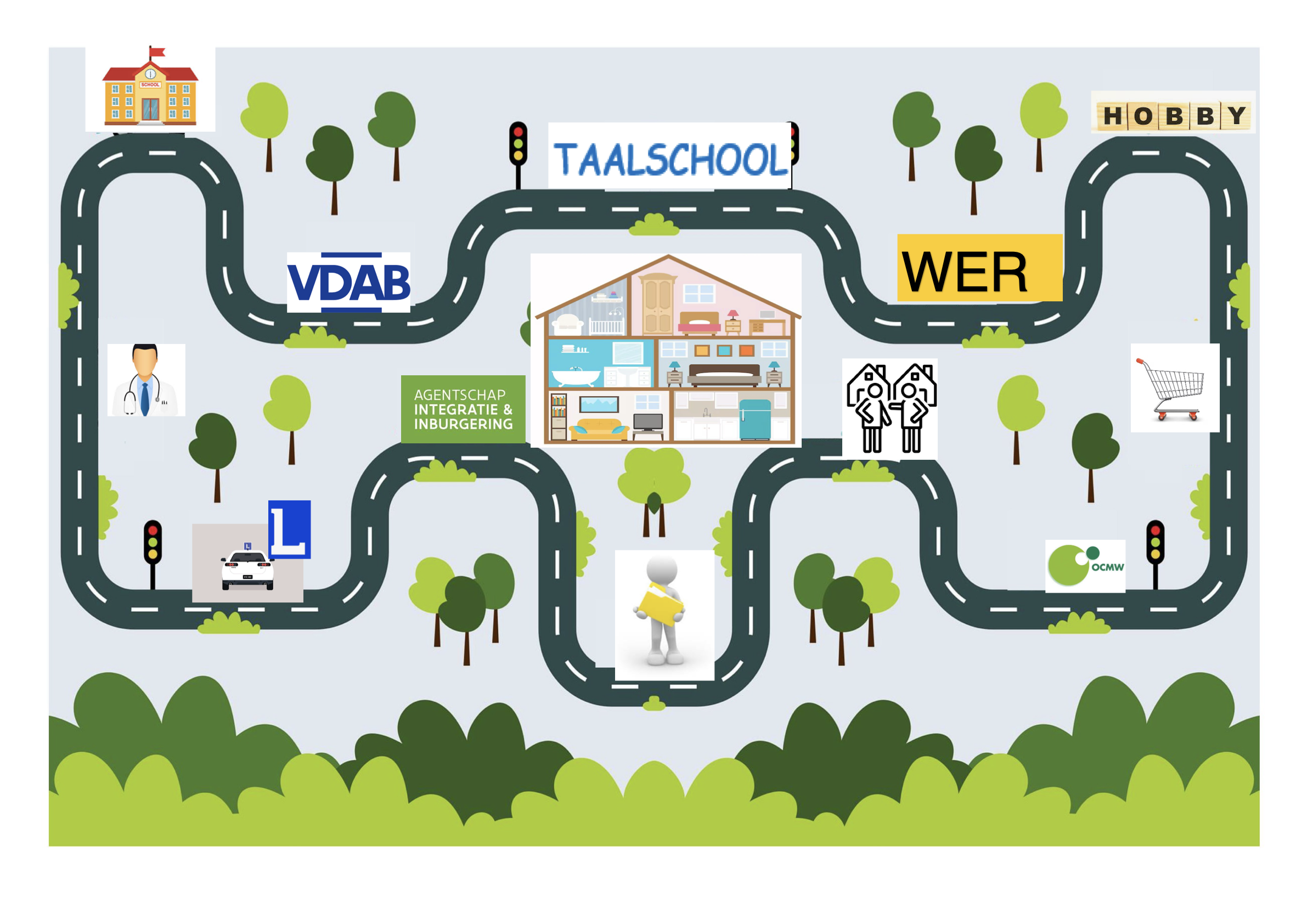
Cartographic turn- mapping

The cartographic turn mapping is an alternative approach to language evaluation that transforms assessment from a final test into an active part of the learning process. Rather than measuring only correct language performance, learners use a non-geographical map, movable tokens, notes, and dialogue to reflect on their everyday experiences, challenges, and future aspirations. The method is grounded in Conversation Analysis Second Language Acquisition (CA-SLA), dynamic assessment, and design anthropology, emphasizing language learning through real-life participation and interaction. Through collaborative discussions, mapping activities, video narration, and class presentations, learners make their experiences visible, explore future possibilities, and build confidence in using language beyond the classroom.

Read More

Interaction Navigator

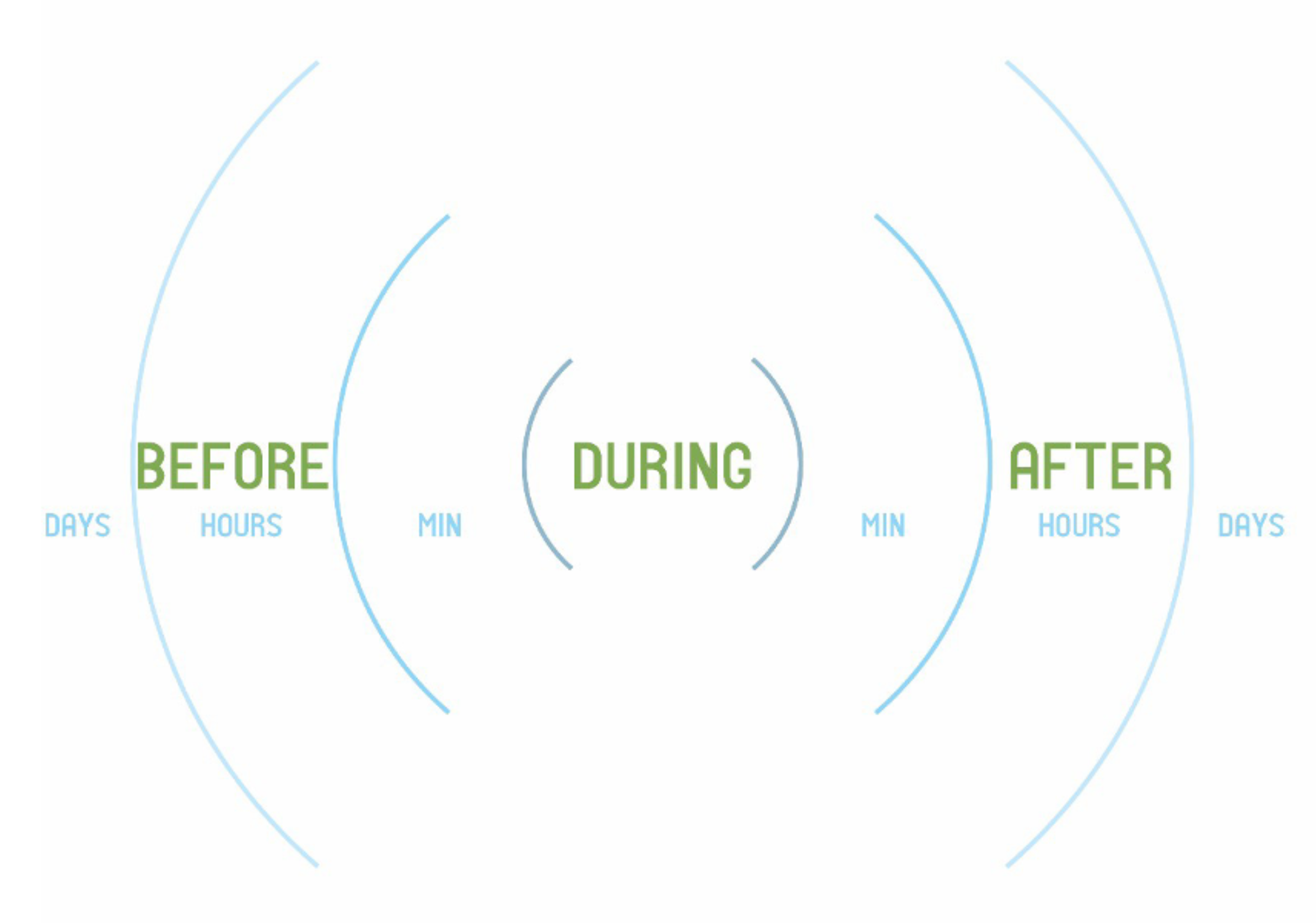
The interaction navigator (Clark & Torretta, 2016) is a template for planning and reflecting upon the before, during and after moments of an in the wild interaction. By placing a target interaction in the middle of the template, a learner can plan and reflect upon what can support such the interaction minutes, hours and days before, and opportunities for repeating the content of the interaction minutes, hours or days afterward (for example, 3 minutes, 3 hours, 3 days). The interaction navigator can be used for three different phases on in thewild learning: (1) planning, (2) reporting and (3) reflecting.

  1. Planning for interaction: This tool can be used by a learner to plan how to prepare days, hours and minutes before the interaction.
  2. Reporting: The Interaction Navigator can be used as a report tool in which the learner traces his path through the before, during and after of an interaction mapping what happened in these different moments around the central interaction.
  3. Reflection: When a learner has a Interaction navigator filled with both planning and reporting, thetemplate can be used as a reflection tool. In this case, the learner can focus on what went different than planned and why, and consequently try to identify ways to improve the before, during and after of future interactions.

Read More

Journey Mapping

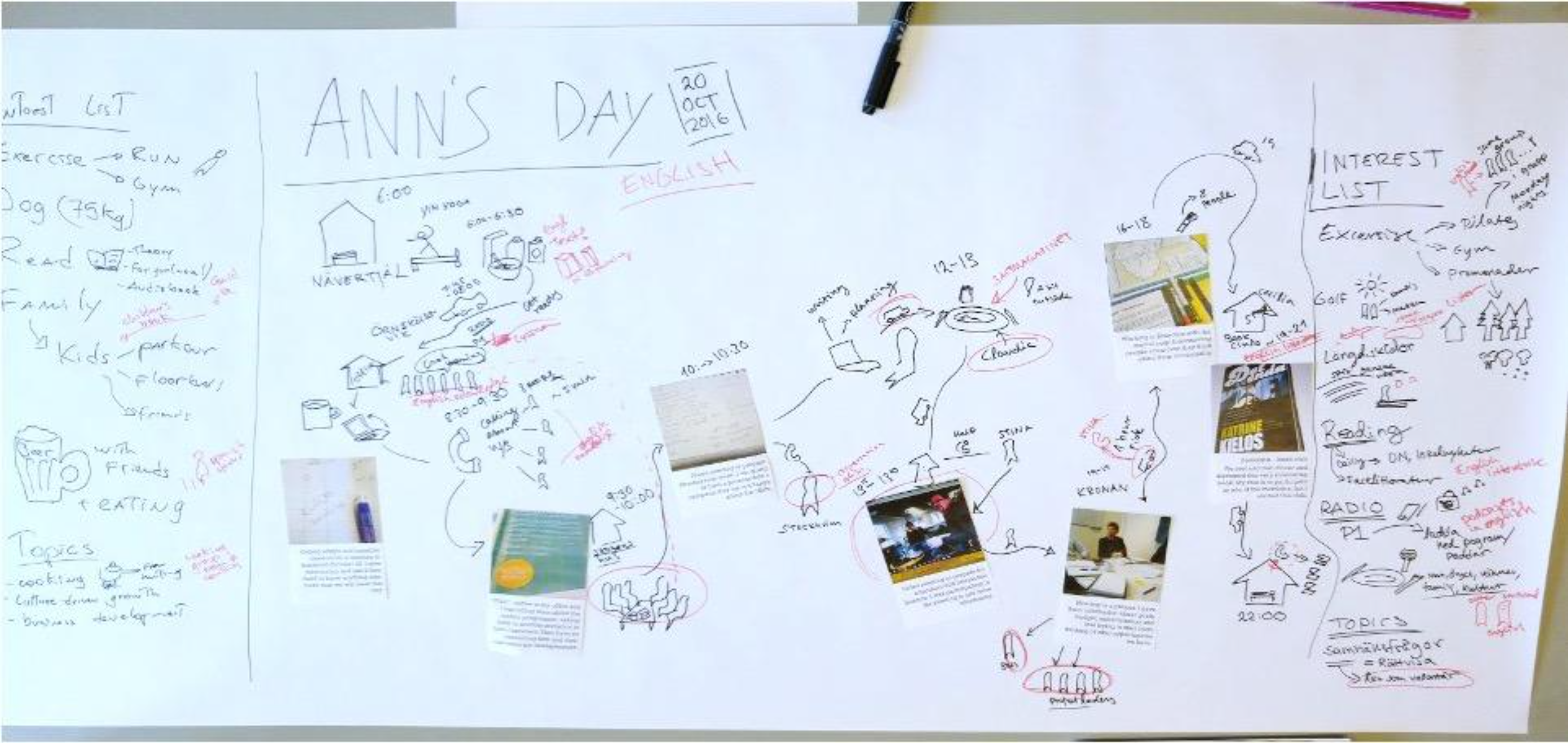
Journey Mapping is a tangible interview technique that visualizes events and interactions in a sequential way. The goal of a journey map is to reach a more nuanced view of a day in the life of the learners in order to find moments that can support language learning. Journey mapping sessions work best with two or more people -­‐ an interviewer and an interviewee. The interviewer asks questions about a specific day in the learner’s life and draws the answers on a paper making a continuous line. A journey map can also be done mixing drawing and pictures (from a photo journal) of the learner’s interactions. When the journey map is ready, learners can identity moments in a day where more interactions could happen as well as identify possible moments/resources that can support those interactions as opportunities for preparation, rehearsal, practicing and reporting.

Read More

Network Map

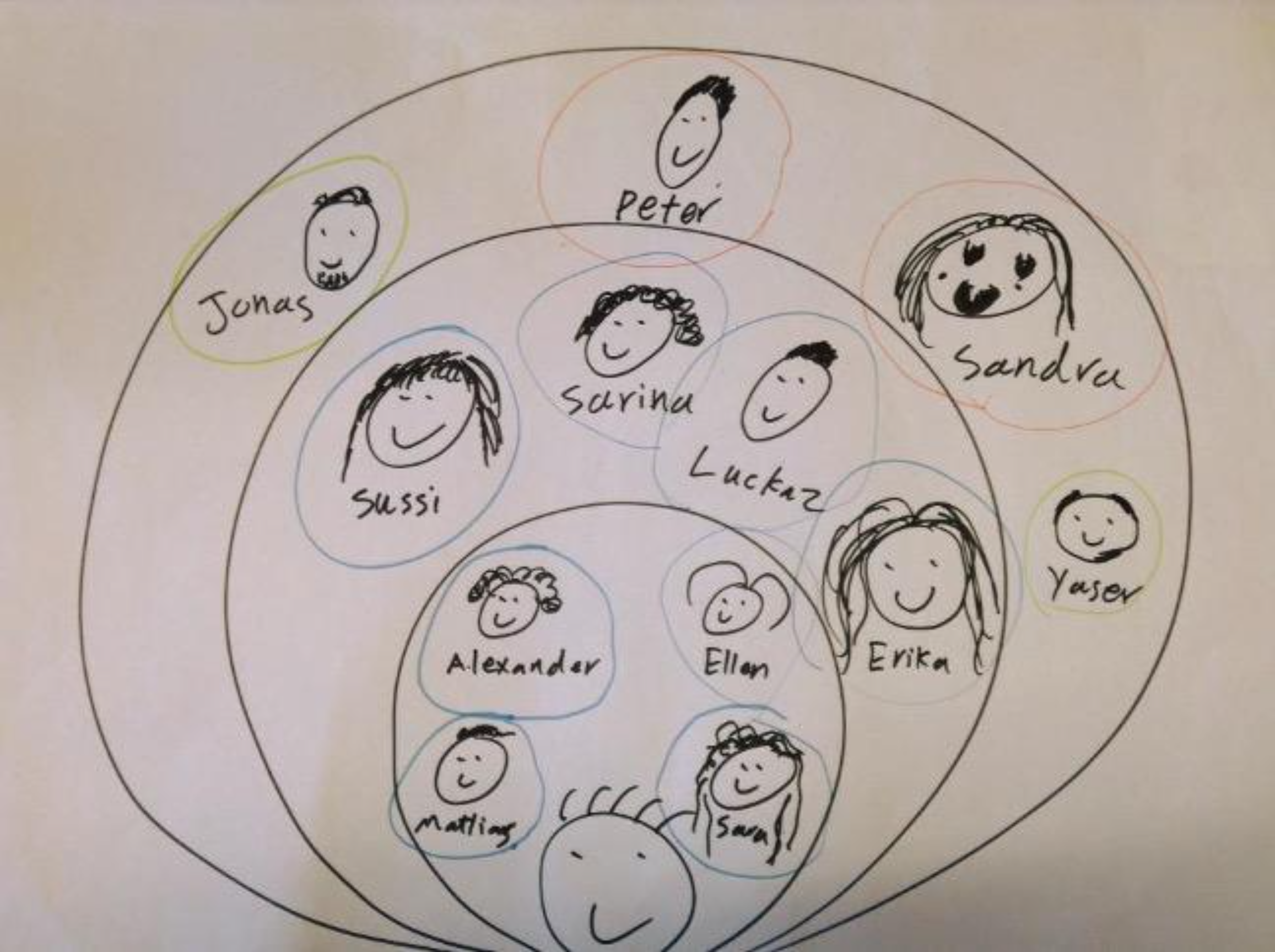
The network map (Clark & Lindemalm, 2011) is a template for mapping the network of people around a language learner. As a reflective tool, the network map helps identify the actual people that a learner is interacting with in the target language in everyday life. For this, the network map asks the learner to position herself in the middle of the map and then place the people around her by levels of proximity based on criteria like comfort in speaking with, number of interactions per day. The Network Map helps learners focus on finding people for more challenging interactions, such as choosing to interact with people that were positioned in theouter circles. Once a learner creates one map based on a specific question, the learner can then recreate it as the learning journey continues and thus see how their target language network has grown and changed over time.

Read More

Photo Journal

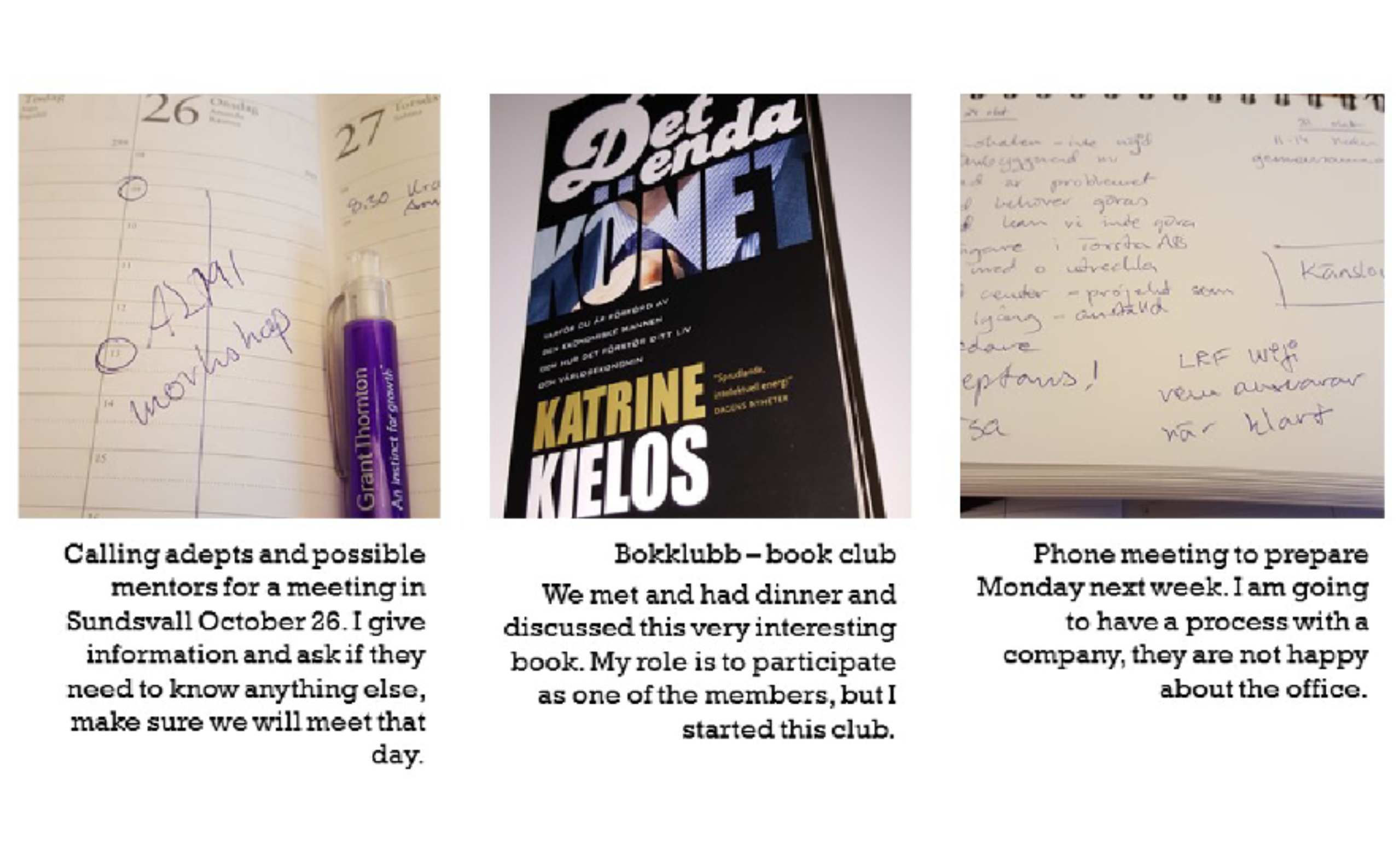
One step for raising awareness about the potential of everyday interactions for language learning encounters is to bring to light the interactions that language learners are involved in during their everyday lives. Through a photo journal, the interactions that a student had during a specific timeframe can be made visible through pictures and supporting text. A photo journal consists of photographing daily interactions during a specific period of time (for example: commuting home, one day, one weekend or between two classes). The learner then places the pictures on a template including a short description of each interaction photographed. The result of a photo journal is a pool of possible interactions that the language learner can use as language learning opportunities.

Read More

My Places

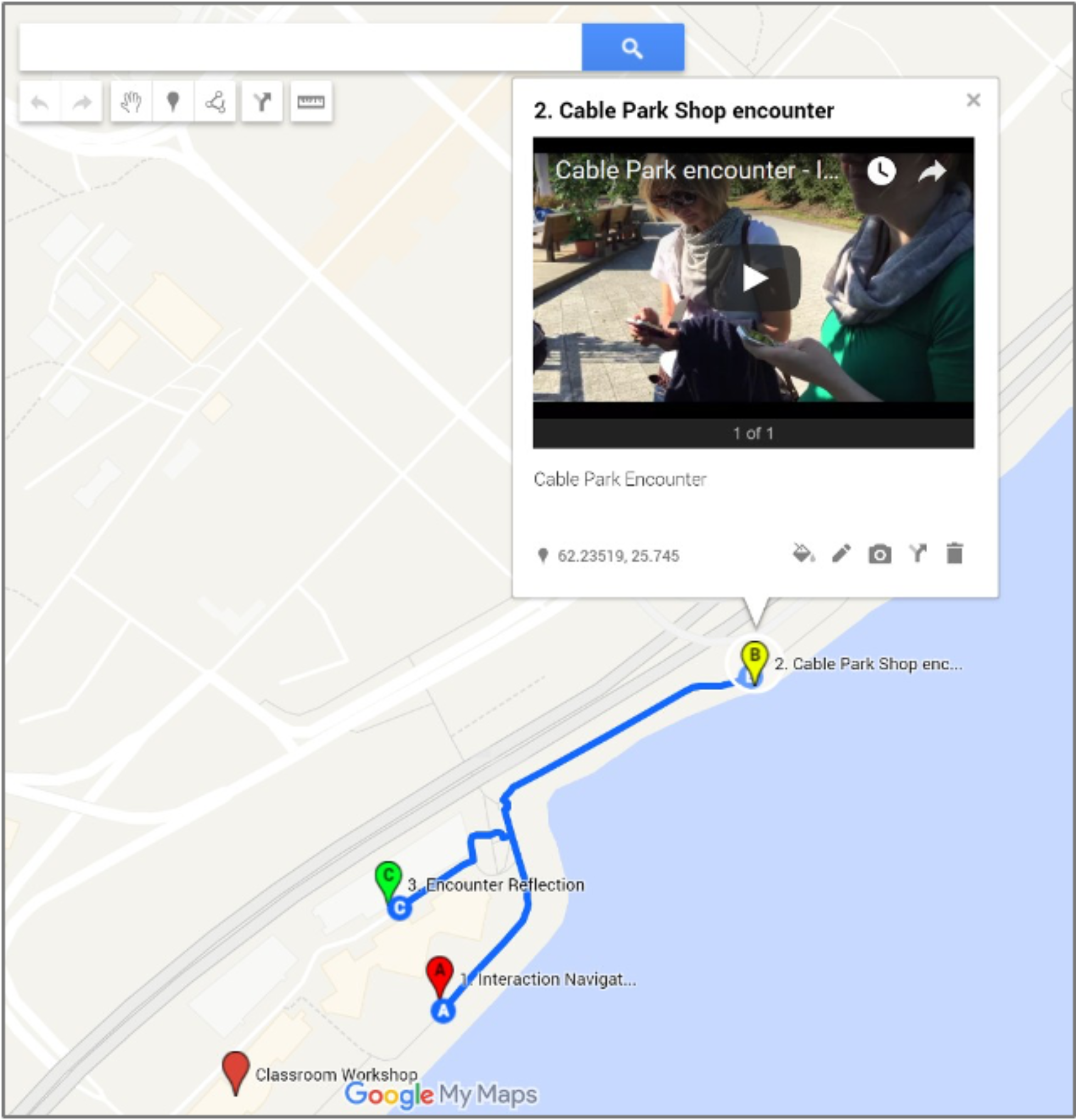
My Places (Clark & Lindemalm, 2011) is a technique for mapping out places where the learner can have interactions in the target language -­‐ for example, a restaurant with personnel that speak the target language. My Places can be used as an individual mapping exercise as with the ‘Journey Map’ but it can also be used in a more collaborative format on platforms such as Google Maps. In the case of using digital platforms, learners can pin different places and write short descriptions about them, creating a shared poll of places to interact in the target language. Creating a ‘My Places Map’ is especially useful when learners are learning a language that is not the local one (like learning Spanish in Stockholm). Nevertheless, when learning the local language, this activity can be used for tagging of specific places such as, for example, places in which the learner is interested, places where people are friendly/supportive towards language-­‐learners, places where a learner can have longerinteractions, and so on.

Read More

One Shot Video

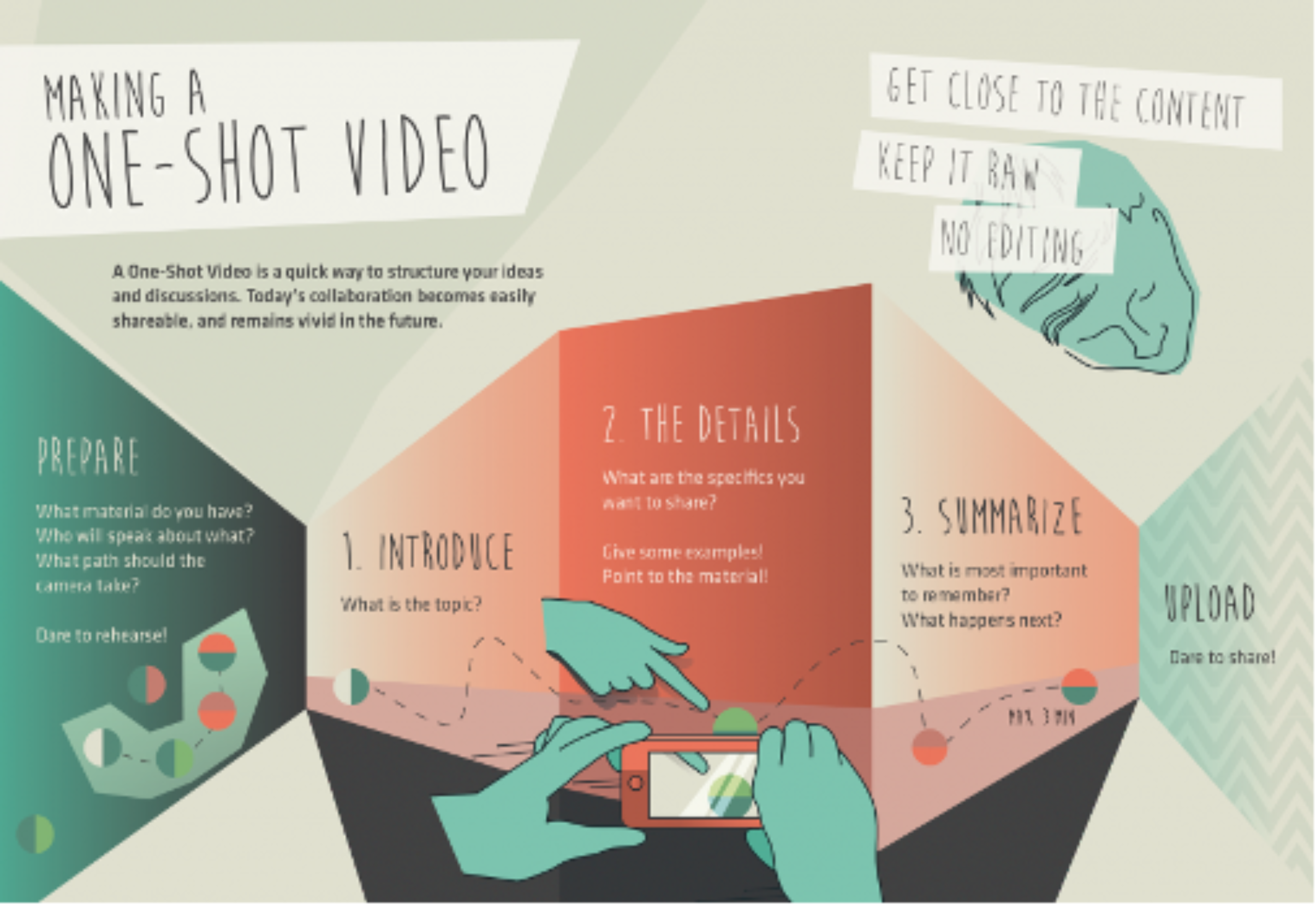
One-­‐shot video is technique that uses a smart phone to provoke collaborative performances at the end of working session. The technique uses up-­‐close video-­‐capture of the material generated during a meeting (on the whiteboard, table or notebook) with narration that structures the ideas the material represents. The short, one-­‐shot video format encourages people to re-­‐perform and summarize together what they consider to be the most important points of a meeting or material they have been working on. It creates a rich collaborativeexpression becomes a content take-­‐away, which can be used for reflection, to kick-­‐off the next session,supporting continuity from one interaction to the next. One-­‐shot video is an easy-­‐to-­‐use technique that isflexible and works well for learners to document the results of using the templates above.

Read More

Friendly Mirroring

Friendly Mirroring is a sensitising activity where a learner and speaker repeatedly say the same word or phrase together. The goal is not correction but attentive listening, experimentation, and confidence building. By temporarily suspending correction, learners can focus on rhythm, pronunciation, and participation.

Read More

Rehearsal Café

Rehearsal Café is an activity that links a practice environment with a real interaction environment. Learners rehearse interactions before engaging in them and then return to reflect on their experiences.

Read More

Country-Specific Developments and Implementations within the Language Learning in-the-Wild (L2W) Project in Europe

About and Mission

Language learning in the wild (L2W) is about using the resources available in the second language life world of the newcomers for learning the local language. The local language plays an immediate role in the everyday lives of newcomers. At a minimum, newcomers are overhearers of and eavesdroppers to the spoken words around them and they encounter all types of written material, from advertisements in the streets to package texts on their favorite granola. L2W opens the doors of the language classrooms and encourages learners to actively seek opportunities to engage with local speakers in everyday situations—such as shops, public services, or community spaces—where language use is meaningful, spontaneous, and unpredictable. This website contains current and previous work about L2W, gives access to relevant publications and documents tools and inpirations that put the learner at the center of the learning process. Research about L2W builds on interaction research, usage based language acquisition processes and experiential learning models. It practices co-design with learners, teachers and organizations and their contacts to further the development of learning practices, materials and environments.

Inspirations and Tools

Language learning is shaped by the environments, people, materials, and activities that surround us. The tools and inspirations presented here are not fixed methods or step-by-step instructions. Instead, they introduce different tools that can be tried out once to understand raise aware to different possibilities and further adapt to your own situation. They are meant for raising awareness to different resources, exploring contexts, identifying opportunities for interaction, and engaging with language and reflection in different ways.

Each tool offers a perspective on how learning can emerge through observation, participation, collaboration, and reflection. They can be adapted, combined, and reinterpreted to suit different learners, settings, and goals. Examples of how they have been used can be found in initiatives such as Språkskap, the Taalarena, and The Icelandic Village.

Sit Talk Sit

Sit–Talk–Sit is a simple activity structure for supporting language learning through real-world interactions. It helps learners organize participation by creating a rhythm of preparation, action, and reflection within everyday situations. Rather than treating interaction as something that happens after learning, Sit–Talk–Sit treats interaction itself as the primary learning opportunity.

Read More

Scouting

Scouting consists of surveying the environment to assess how the context is organized. Scouting is an observation exercise aimed at identifying potential resources that can support interactions in a specific context. When scouting, a learner pays attention and takes note of the social aspects of the space: types of interaction,people and order/rules of the interactions that take place in the context; as well as material aspects: written and unwritten material that can be used to facilitate and support an interaction.

Read More

Expander

Expander is a reflective activity for listing possible ways to make an interaction longer in time and/or more complex in conversation. In this exercise, the learner searches for things such as topics, phrases, words, sentences and ideas that can expand an analyzed interaction. Expanders can be used both when planning for and reflecting on an interaction. The Expander card is a frame to be placed on top of an interaction -­‐ on an Interaction Navigator or Journey Map -­‐ but can be also used as a list to be taking during an interaction.

Read More

Cartographic turn- mapping

The cartographic turn mapping is an alternative approach to language evaluation that transforms assessment from a final test into an active part of the learning process. Rather than measuring only correct language performance, learners use a non-geographical map, movable tokens, notes, and dialogue to reflect on their everyday experiences, challenges, and future aspirations. The method is grounded in Conversation Analysis Second Language Acquisition (CA-SLA), dynamic assessment, and design anthropology, emphasizing language learning through real-life participation and interaction. Through collaborative discussions, mapping activities, video narration, and class presentations, learners make their experiences visible, explore future possibilities, and build confidence in using language beyond the classroom.

Read More

Interaction Navigator

The interaction navigator (Clark & Torretta, 2016) is a template for planning and reflecting upon the before, during and after moments of an in the wild interaction. By placing a target interaction in the middle of the template, a learner can plan and reflect upon what can support such the interaction minutes, hours and days before, and opportunities for repeating the content of the interaction minutes, hours or days afterward (for example, 3 minutes, 3 hours, 3 days). The interaction navigator can be used for three different phases on in thewild learning: (1) planning, (2) reporting and (3) reflecting.

  1. Planning for interaction: This tool can be used by a learner to plan how to prepare days, hours and minutes before the interaction.
  2. Reporting: The Interaction Navigator can be used as a report tool in which the learner traces his path through the before, during and after of an interaction mapping what happened in these different moments around the central interaction.
  3. Reflection: When a learner has a Interaction navigator filled with both planning and reporting, thetemplate can be used as a reflection tool. In this case, the learner can focus on what went different than planned and why, and consequently try to identify ways to improve the before, during and after of future interactions.

Read More

Journey Mapping

Journey Mapping is a tangible interview technique that visualizes events and interactions in a sequential way. The goal of a journey map is to reach a more nuanced view of a day in the life of the learners in order to find moments that can support language learning. Journey mapping sessions work best with two or more people -­‐ an interviewer and an interviewee. The interviewer asks questions about a specific day in the learner’s life and draws the answers on a paper making a continuous line. A journey map can also be done mixing drawing and pictures (from a photo journal) of the learner’s interactions. When the journey map is ready, learners can identity moments in a day where more interactions could happen as well as identify possible moments/resources that can support those interactions as opportunities for preparation, rehearsal, practicing and reporting.

Read More

Network Map

The network map (Clark & Lindemalm, 2011) is a template for mapping the network of people around a language learner. As a reflective tool, the network map helps identify the actual people that a learner is interacting with in the target language in everyday life. For this, the network map asks the learner to position herself in the middle of the map and then place the people around her by levels of proximity based on criteria like comfort in speaking with, number of interactions per day. The Network Map helps learners focus on finding people for more challenging interactions, such as choosing to interact with people that were positioned in theouter circles. Once a learner creates one map based on a specific question, the learner can then recreate it as the learning journey continues and thus see how their target language network has grown and changed over time.

Read More

Photo Journal

One step for raising awareness about the potential of everyday interactions for language learning encounters is to bring to light the interactions that language learners are involved in during their everyday lives. Through a photo journal, the interactions that a student had during a specific timeframe can be made visible through pictures and supporting text. A photo journal consists of photographing daily interactions during a specific period of time (for example: commuting home, one day, one weekend or between two classes). The learner then places the pictures on a template including a short description of each interaction photographed. The result of a photo journal is a pool of possible interactions that the language learner can use as language learning opportunities.

Read More

My Places

My Places (Clark & Lindemalm, 2011) is a technique for mapping out places where the learner can have interactions in the target language -­‐ for example, a restaurant with personnel that speak the target language. My Places can be used as an individual mapping exercise as with the ‘Journey Map’ but it can also be used in a more collaborative format on platforms such as Google Maps. In the case of using digital platforms, learners can pin different places and write short descriptions about them, creating a shared poll of places to interact in the target language. Creating a ‘My Places Map’ is especially useful when learners are learning a language that is not the local one (like learning Spanish in Stockholm). Nevertheless, when learning the local language, this activity can be used for tagging of specific places such as, for example, places in which the learner is interested, places where people are friendly/supportive towards language-­‐learners, places where a learner can have longerinteractions, and so on.

Read More

One Shot Video

One-­‐shot video is technique that uses a smart phone to provoke collaborative performances at the end of working session. The technique uses up-­‐close video-­‐capture of the material generated during a meeting (on the whiteboard, table or notebook) with narration that structures the ideas the material represents. The short, one-­‐shot video format encourages people to re-­‐perform and summarize together what they consider to be the most important points of a meeting or material they have been working on. It creates a rich collaborativeexpression becomes a content take-­‐away, which can be used for reflection, to kick-­‐off the next session,supporting continuity from one interaction to the next. One-­‐shot video is an easy-­‐to-­‐use technique that isflexible and works well for learners to document the results of using the templates above.

Read More

Friendly Mirroring

A game-line warm-up activity aiming to raise awareness of the difference correcting language versus modeling language. Task: Repeat the same word or sentence 10 times back-an-forther. Try not to react to the learner’s pronounciation, merely say it as you would.

Read More

Rehearsal Café

Rehearsal Café is an activity that links a practice environment with a real interaction environment. Learners rehearse interactions before engaging in them and then return to reflect on their experiences.

Read More